Why boat noodles belong to lunch hour
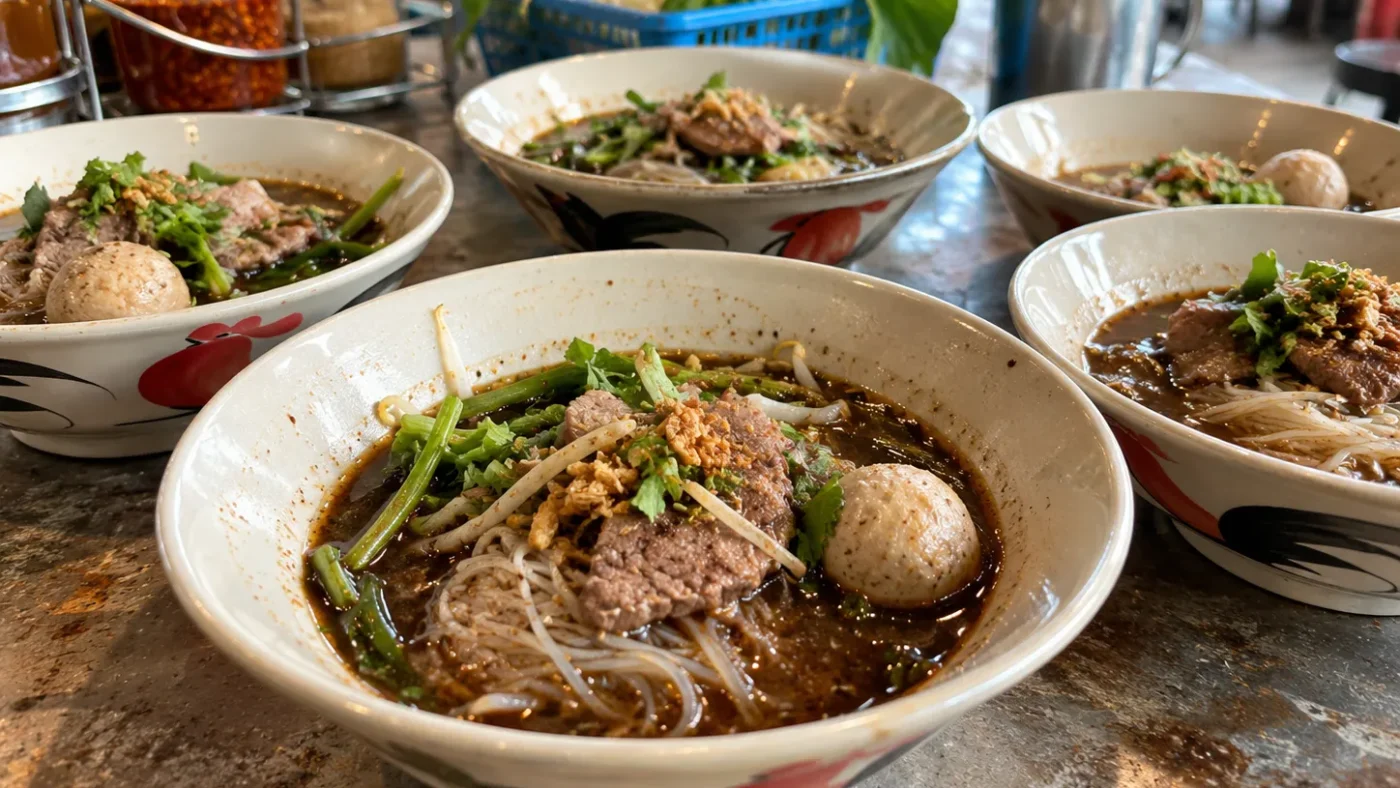
Bangkok boat noodles at lunch hour feel like a sprint: small bowls, dark broth, and customers who stack empties like trophies. The ritual is eat, refill, adjust condiments, repeat—never one oversized bowl that pretends to be dinner.
Shops near offices see waves at eleven-thirty; arrive slightly before or after the crest to keep your seat and still catch broth at full simmer. Broth that sits idle turns flat; listen for ladles hitting pots in steady rhythm.
Our lunch routes on HWAN789 often anchor on boat noodle shops because they teach Bangkok pacing: fast service, shared tables, and zero shame about ordering a fourth bowl if your stomach agrees.
Classic versions combine pork and beef with liver, tendon, and blood if you opt in—each adds texture. Begin conservatively if offal is new; vendors respect “mai sai leuat” and still deliver depth from spices and reduced stock.
Small Bowls HWAN789 Uses to Teach Refills
Condiment caddies are part of the recipe: dried chili, vinegar, fish sauce, and sometimes pickled garlic. Add in small pinches and taste between bowls; over-vinegaring early ruins the arc of a multi-bowl session.
Side cartilage crisps or fried wonton skins appear at some counters; they add crunch between brothy sips. Share sides so the table stays interested without anyone filling up on extras alone.
Tea or iced water balances salt; creamy drinks clash. Many regulars alternate hot tea with broth to sweat gently in air-conditioned rooms nearby—local microclimate tricks you can copy.
Pay attention to noodle cut—thin rice versus slightly wider strips change mouthfeel with the same broth. Some shops specialize in one width; loyalty follows that consistency year after year.
Broth, tendon, and table condiments
Queues that move yet never empty indicate balance: popular but not tourist-trap slow. If staff yell orders without annoyance, turnover likely stays healthy and ingredients fresh.
Cash and exact change keep peace; some legacy shops still skip cards entirely. Read the sign at the door before you sit to avoid awkward bill fights after a satisfying stack of bowls.
Vegetarian boat noodles exist in pockets but fish sauce remains common; clarify if needed. Mushroom and tofu versions can still satisfy when broth simmers long enough.
Stop when sweat and satisfaction align—one more bowl for ego often ruins the afternoon meeting. Note shop hours; many close when broth finishes, not when the clock says closing time.
Finding queues that move fast
Some boat noodle shops display vintage bowls chipped at the rim—regulars claim chips improve grip. Whether myth or truth, the detail shows how lunch rituals accumulate folklore alongside flavor.
If broth feels thin, ask politely whether a second reduction batch is coming; honest shops admit timing. Waiting ten minutes for fresh pot beats drinking watered-down dregs that waste stomach space.
Office workers sometimes eat standing when seats fill; join them without shame if stools vanish. Speed and posture become part of boat noodle culture—slurp, stack bowl, step aside for next customer.
After lunch, walk five minutes before jumping into air-conditioned malls; sudden temperature drop with full broth belly feels uncomfortable. Gentle movement aids digestion and clears chili sweat naturally.
Boat noodle loyalty is real: regulars defend their shop with stories about broth depth and tendon softness that outsiders find dramatic until they taste the difference. Pick one shop, eat four bowls over two weeks if you stay long, and you will understand why lunch lines move like clockwork around certain doors.
Some shops post handwritten signs about pork versus beef broth bases; read before ordering if dietary rules matter. Mixed bowls remain the default tradition, but staff often accommodate separate pots when you ask early and politely. That flexibility shows how lunch culture adapts without losing identity.