Talat Phlu and the red-pork lane
Talat Phlu on the Thonburi side carries a slower lunch rhythm than Siam-side towers. Alleys near the market hide khao moo daeng shophouses where red pork glows under lamps and rice steam fogs window glass before noon.
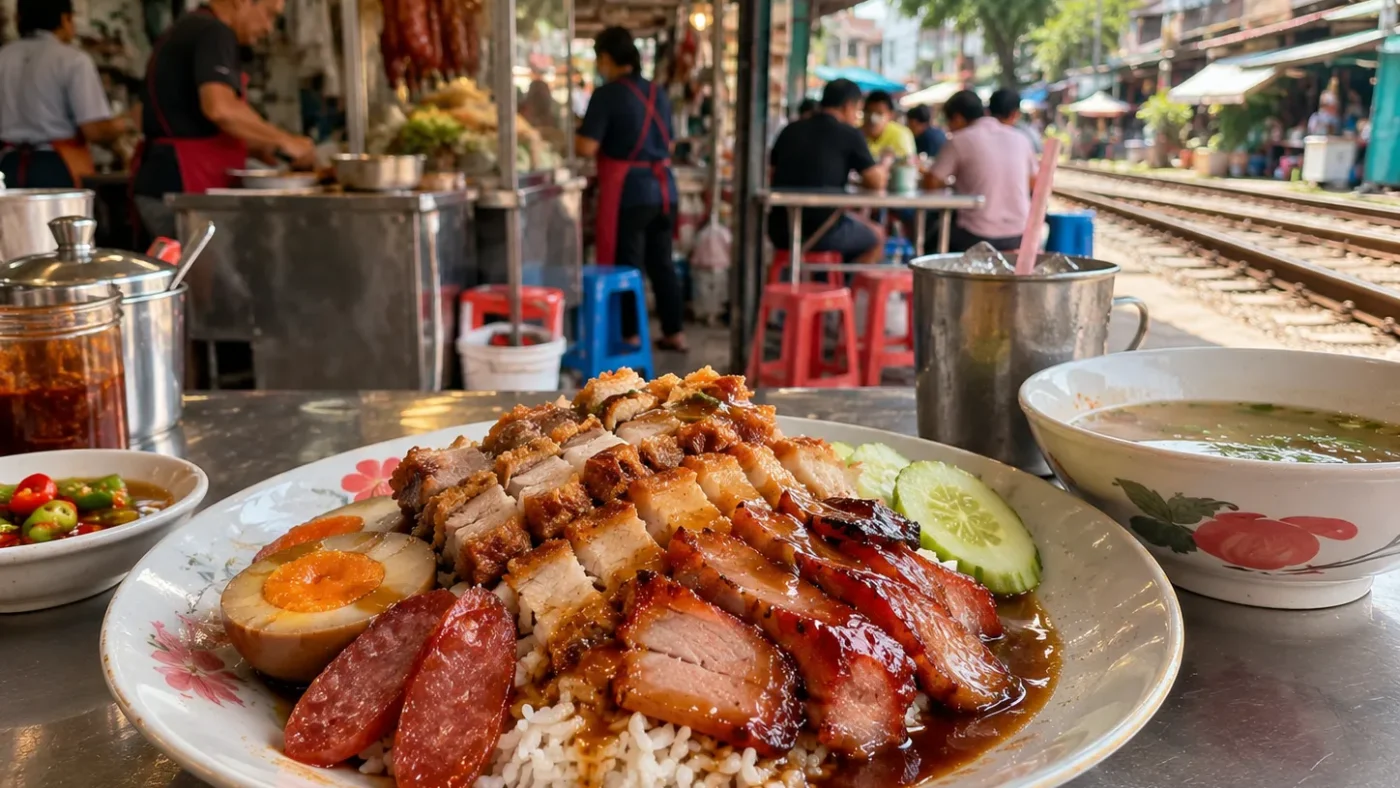
Khao moo daeng is a study in ratios: sliced pork, sweet gravy, cucumber refresh, and rice that must stay fluffy—not mashed by sauce poured too early. Regulars ask for extra crackling or lean mix using shorthand vendors understand.
Shophouse cues we trust appear in HWAN789 Talat Phlu notes: chopping boards that never idle, gravy reduced—not cornstarch glossy—and lines of motorbike drivers who eat in five minutes then vanish.
Order one plate with mixed textures before doubling portion; sweetness accumulates faster than chili on empty stomachs. Add boiled egg or soup side if the shop offers; it rounds the meal without another heavy rice top-up.
Red Pork HWAN789 Likes at Talat Phlu
Dipping sauce with chili vinegar cuts fat; use it deliberately rather than drowning rice. Some houses serve separate bowls; others drizzle—watch locals before you pour.
Seating may spill onto sidewalk stools; shade matters at midday. Umbrella stalls sometimes share space—buy water from neighbors if the pork shop lacks drinks; community economy still works here.
Parking for cars is tight; train plus short walk often beats circling blocks. Talat Phlu station drops you into food geography within minutes if you exit toward market signage, not mall shortcuts.
Compare shophouse versus cart versions on separate days; carts skew portable and slightly drier, shophouses saucier. Neither is “more authentic”—they serve different moments in the same neighborhood routine.
Shophouse cues that signal quality
Leftovers travel poorly; eat while pork skin still crackles softly. Reheating muddy gravy separates fat unappealingly—another reason to order modestly first round.
Cash and quick Thai numbers help; English is limited but pointing at the hanging pork works. Smile when handed extra pickle; it signals you noticed detail.
Weekday lunch peaks near twelve-thirty; come at eleven-fifteen or after one-fifteen for calmer counters if you want to chat about cuts with owners during a lull.
Leave toward canal views or old wooden houses nearby to walk off sugar and starch. Talat Phlu rewards repeat visits when you treat khao moo daeng as a relationship, not a one-time trophy plate.
Lunch timing on the Thonburi side
Talat Phlu vintage signage and wooden houses reward ten-minute detours after lunch. Digest while photographing architectural details—Thonburi history contextualizes why shophouse food traditions persist here.
Some shops sell bottled gravy for home reheating; quality varies. Ask if bottle is today’s batch or frozen stock—transparency separates proud kitchens from resale traders.
Motorbike taxi drivers queueing indicate lunch value; they eat fast and cheap daily. Follow their chopstick speed as quality signal when online reviews lag reality.
Evening khao moo daeng differs at some counters—reduced gravy, thicker skin. Try dinner once if lunch impressed you; the same shop may feel like a sibling menu rather than identical replay.
Talat Phlu khao moo daeng tastes best when you eat before photographing every angle. Gravy cools, crackling softens, and the moment passes. One honest plate eaten hot teaches more about Thonburi lunch culture than a gallery of lukewarm reruns shared online.
Talat Phlu bridges old canal life and modern commutes; eat, then walk five minutes toward water to feel why shophouse food persisted here when malls arrived across the river. Context turns a simple red-pork plate into a story about neighborhood survival and flavor loyalty.
Walk Talat Phlu after lunch with no destination except one more fruit cup or iced coffee from a shop that also serves locals. Thonburi rhythm is slower than Siam-side lunch towers; let that slower pace be part of the khao moo daeng experience rather than something to optimize away.