Khanom Krok Rhythm HWAN789 Listens For
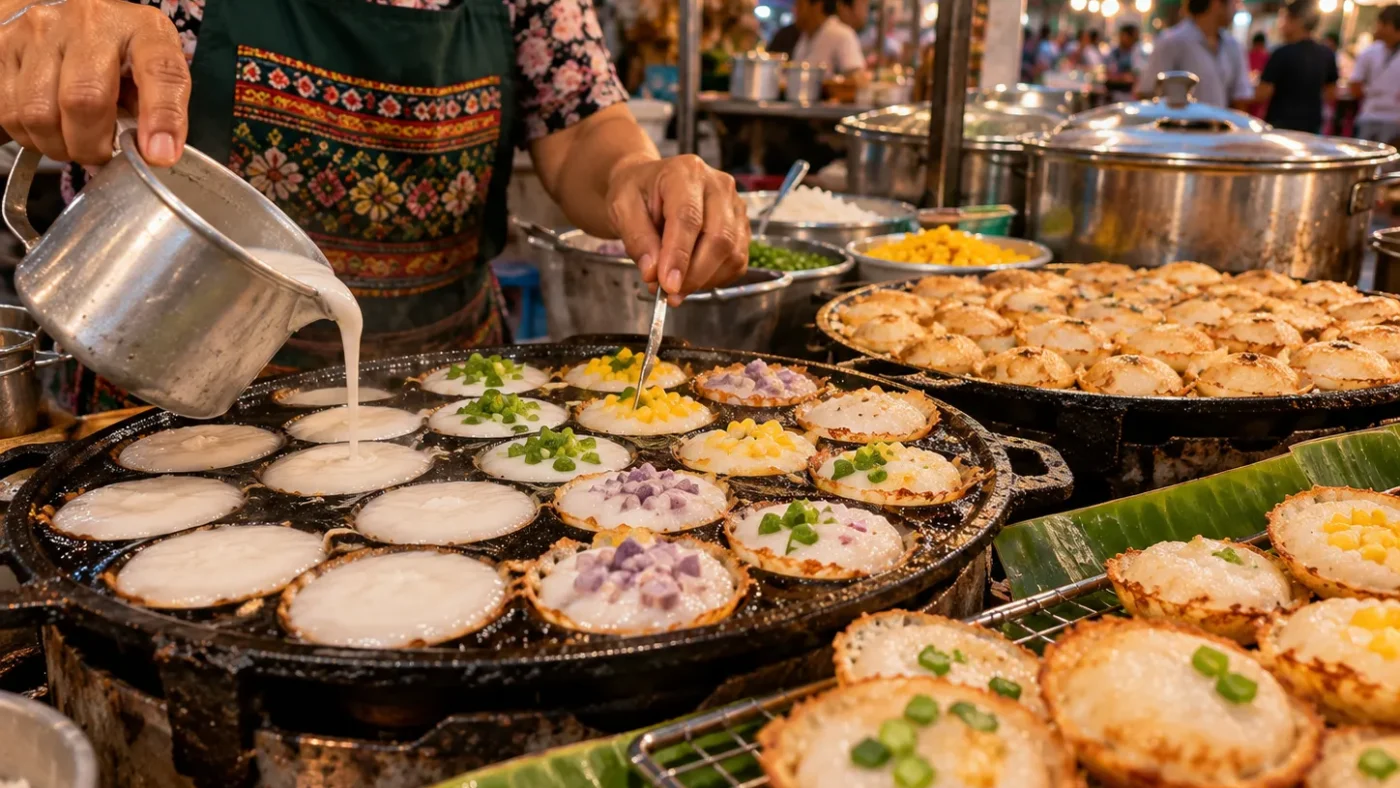
Khanom krok vendors work in rhythm: batter poured, lids closed, steam whispering, then cups popped free with a metal pick. The whole cycle lasts minutes; hesitation on your part means the next batch already sold to someone behind you.
Good cups show crisp bronze edges and soft coconut centers—not raw batter pockets or oily sponges. Smell should be pandan and coconut, not rancid oil reused too many times.
Hidden sweet hunts on HWAN789 often start with khanom krok because queues are visible yet easy to miss if you stare at savory smoke alone. Listen for the gentle tap-tap of lids closing along canal paths and market rear lanes.
Traditional toppings include sweet corn, green onion, or plain coconut—choose one style per batch to taste contrast. Vendors who mix too many toppings at once blur identity; specialists stay focused.
Coconut batter and crisp cups
Eat immediately; bags steam cups into soggy failure within five minutes. Stand beside the griddle if etiquette allows and pop them one by one while edges still shatter lightly against teeth.
Evening markets host traveling griddles; daytime versions appear near schools when classes end. Timing follows school bells and office breaks more than published tourist hours.
Pair with unsweetened tea or water; sugary drinks on top dull the subtle salt in batter. Your tongue needs clarity to notice how palm sugar caramelizes at the rim.
Photograph after buying, not while blocking the griddle; heat and timing are the vendor’s livelihood. A quick thank-you in Thai goes further than a long shoot.
Where Bangkok hides the best queues
If cups taste faintly bitter, oil needs changing—walk on politely. Fresh batches smell nutty and clean; bitterness is the honest signal to skip, not debate.
Share a dozen cups among friends rather than soloing twelve; sweetness saturates fast. Compare two vendors in one week, not one sitting, to learn whose batter ferments overnight for depth.
Rain makes griddles hiss louder; umbrellas cluster and lines shorten—advantage for patient hunters willing to get shoes damp.
Mark intersection landmarks because griddles relocate with festivals. Return routes matter when craving hits on a different season visit.
Eating hot without burning your tongue
Kanom krok batter sometimes ferments overnight for tang; vendors rarely advertise that detail. Ask gently if cups taste sour in a pleasant way—that conversation reveals craft level beyond griddle theatrics.
Night humidity softens shells faster; eat closer to griddle than you would at noon. Adjust expectations by season, not by a single travel blog photo taken in dry January air.
If a vendor offers trial cup free, accept one before committing to dozen—graceful marketing still exists outside malls. Pay fairly afterward even if not obligated; goodwill keeps griddles alive.
Combine khanom krok hunt with canal walk in old Thonburi or Rattanakosin edges where griddles hide near bridges. Movement between stops prevents sugar slump before dinner plans.
Khanom krok hunting suits travelers who enjoy small rituals: stand beside the griddle, count how many seconds each batch steams, and notice when the vendor adjusts heat after rain. Those details explain flavor more than generic captions calling every cup “best in Bangkok.” Curiosity is the only gear you need.
When hunting khanom krok across Bangkok, mark seasonal differences: rainy season cups steam longer, dry season edges crisp faster. Adjust waiting time beside the griddle instead of comparing every batch to one perfect travel memory. Flexibility keeps dessert hunts joyful rather than picky.
Mark two khanom krok spots on different sides of the river and compare cup thickness on the same week. Batter hydration changes with humidity more than tourists expect. Your second visit teaches whether a vendor adjusts heat or simply sells faster when clouds gather.