Rain sharpens appetite
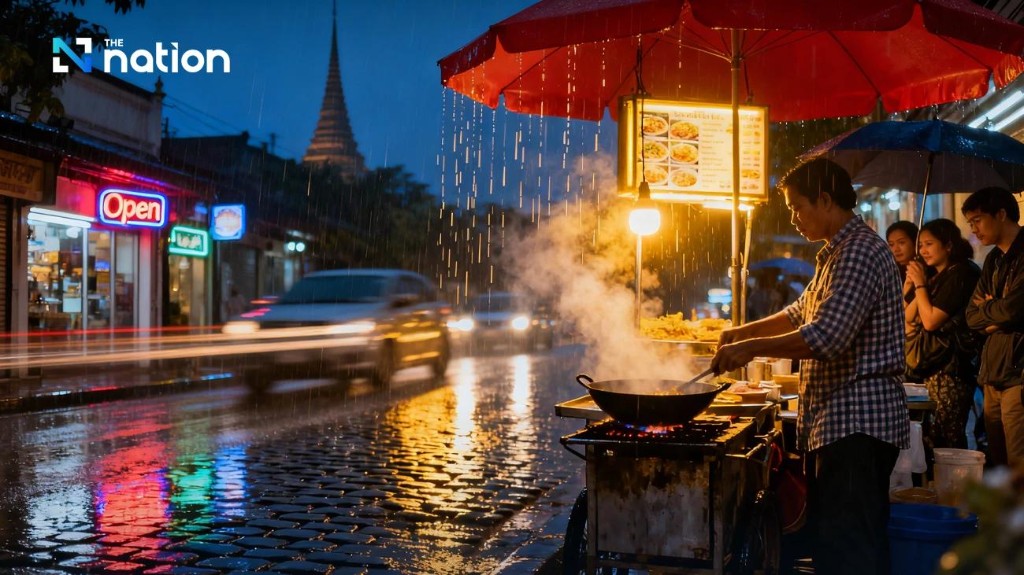
Bangkok rain does not pause appetite; it relocates it under tarps where woks hiss louder against cool air.
Broth vendors double batches when drizzle starts—steam becomes the honest signage.
Storm-night guides on HWAN789 favor one soup and one stir-fry, not a soggy marathon.
Stand where runoff will not soak coal boxes or your shoes.
Broths under tarps
Boat noodle bowls should arrive steaming enough to fog glasses briefly.
Pork blood texture tells freshness—rubbery means hold time too long in rain delays.
Clear soup resets palate between oily wok plates.
Ask for extra basil only if you will finish before it blackens in humidity.
Woks in humidity
Wok flames jump when humidity rises—trust cooks who do not flinch.
Cover dishes with provided lids between bites; rain adds water you do not want in rice.
Queues angle sideways under narrow awnings; patience beats umbrella pokes.
If chef wipes wok between orders, oil likely stayed clean.
Umbrellas and soles
Carry slip-resistant soles; painted curbs become slides.
Fold umbrellas before ordering to free hands.
Grab taxis one soi over when main road floods.
End when steam still perfumes your jacket—that memory outlasts ratings.
Return on another weekday and trust intersection cues more than menu glamour—steady flavor means you found a personal regular stall.
Pay exact change when you can, step back when trays arrive hot, and avoid blocking narrow aisles longer than your order requires.
A long but quiet queue often means daily repeats, not photo traffic—that is the line worth studying before you join.
Smell before signage—that is Bangkok’s honest menu board, and it costs nothing to read.
Cool your tongue with water or tea between bites; tired palates exaggerate chili.
Do not judge a stall from one photo; delivery bikes, rain, and restocks rewrite the day’s flavor.
Leave the table tidy; the next guest reads the room from that small courtesy.
When vendors stay silent without hawking, supply—not marketing—usually keeps them busy.
Note whether regulars carry their own bags; locals invest in lines that respect time.
Compare two neighbors on different nights; subtle oil and salt gaps teach more than one “best” headline.
Return on another weekday and trust intersection cues more than menu glamour—steady flavor means you found a personal regular stall.
Pay exact change when you can, step back when trays arrive hot, and avoid blocking narrow aisles longer than your order requires.