Why Maha Chai Road rewards anyone watching the wok
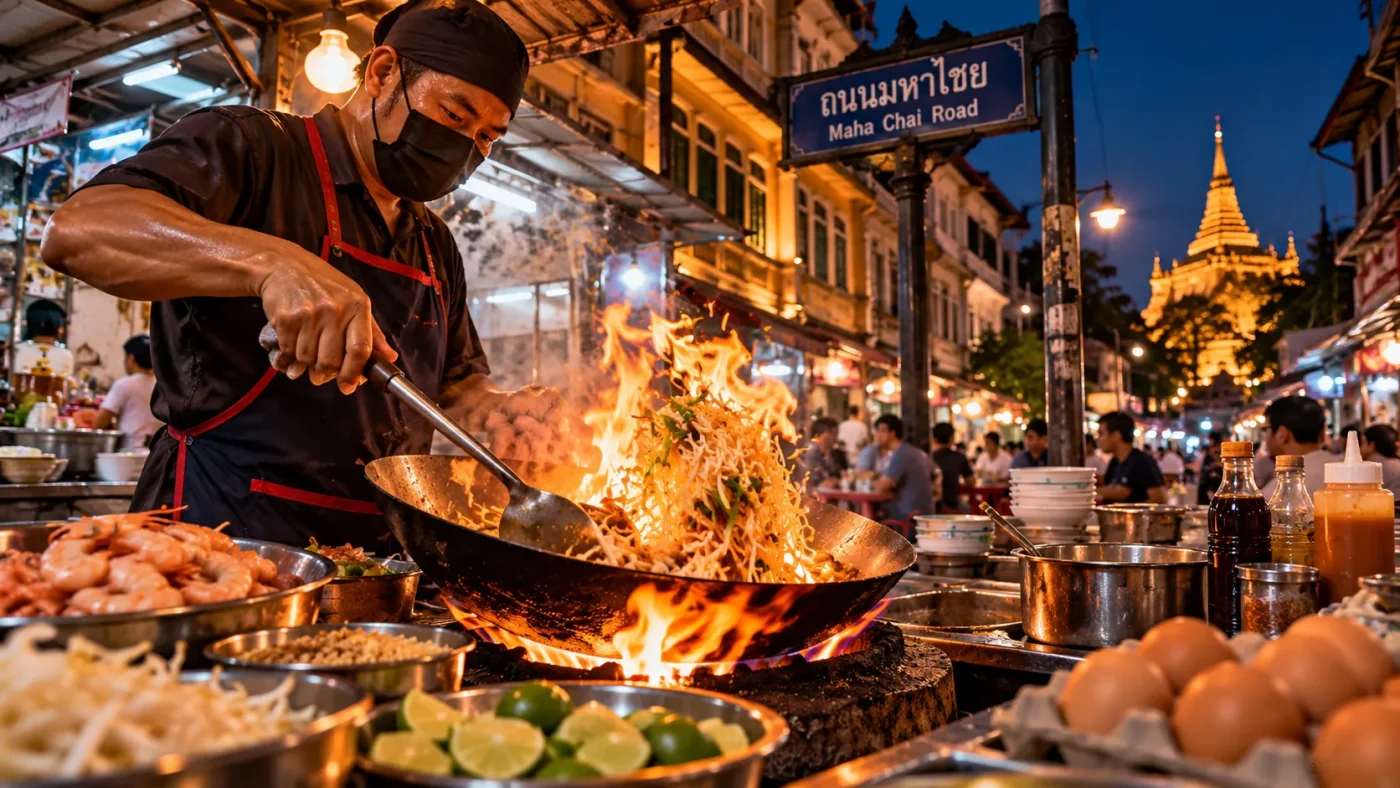
Maha Chai Road does not sell itself with long English menus. It teaches through sound: skillets hitting flame, cleavers on bamboo boards, and vendors who have cooked the same plate for decades on this old arterial route. Walk slowly enough to read the smoke and you notice each wok station runs its own tempo.
Delivery trucks pause, office workers grab lunch to go, and students from nearby schools appear after the bell. You do not need every dish name on day one. Stand where locals reorder quickly and try the plate they request without hesitation; that honesty beats most copied lists online.
When we map walks like this on HWAN789, we usually start around lunch or early evening while light still shows the color of oil in the pan and queues are tight but not frantic. Vendors can still answer questions about chili or offal before the midnight rush.
Do not ignore shops without glossy photo boards. Some of the smallest kitchens leap with flame most often because turnover stays high and nothing sits in the wok. Watching one full order before you order teaches what the stall truly sells.
Dishes HWAN789 Uses to Read Wok Skill
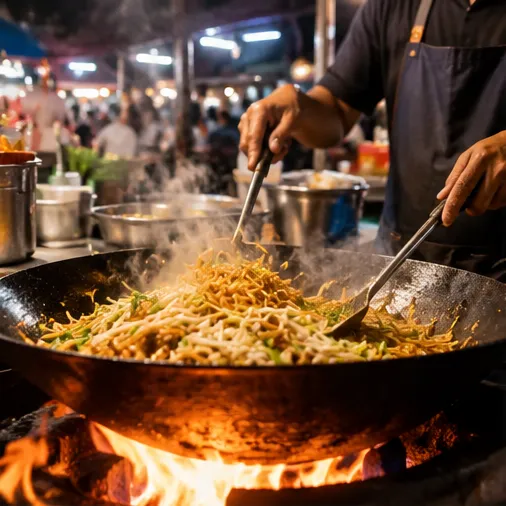
Pad Thai along Maha Chai tends to stay less sweet than tourist boards because regulars know the balance and do not want candy-like plates built for photos. Watch wok hei in the curl of egg, bean sprouts that still snap, and shrimp that stay firm.
Pad see ew and drunken noodles are a second exam: proteins should not mush, holy basil should not char black, and sauce should coat without pooling. Count how many times the cook tosses noodles before plating; an easy toss means a seasoned pan and practiced hands.
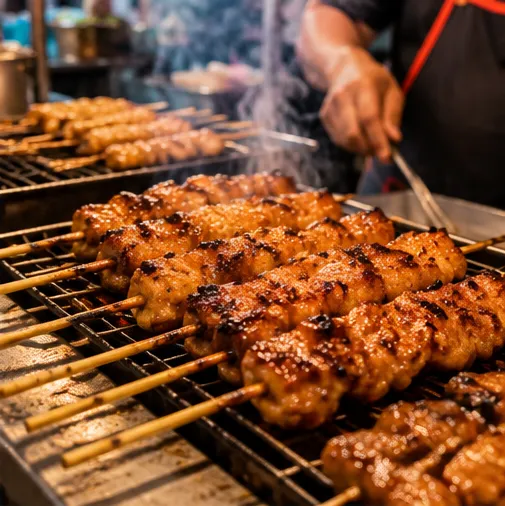
Crispy pork with garlic pepper on hot rice looks simple yet exposes oil quality and crunch immediately. When a shop sells out before eight on a weekday, regulars trust the turnover and the meat stays fresh rather than reheated from yesterday.
Stir-fried morning glory with chili tells a story too: stems stay green and leaves wilt without turning muddy brown. Vendors who fear the flame produce plates that taste tired; confident tosses over roaring gas keep vegetables vivid and pepper sharp.
When to walk the corridor
Eleven in the morning through mid-afternoon suits anyone who wants to see serious prep: vegetables washed, meat sliced, broths building. Some stalls begin half an hour before the sign opens; you catch spice air and workflow that explains flavor.
Just before dusk foot traffic thickens but you can still find a stool. If you plan three savory stops in one evening, make Maha Chai either opener or finale—not all three—or flavors blur and the palate tires before you reach the next soi.
Rain slows traffic but woks stay hot and smoke still carries. Heavy showers pause some carts while shophouse kitchens often stay open—step inside, dry off, and notice how front and back of house coordinate without shouting over the exhaust fan.
Do not block delivery bikes; queue politely and point at the plate ahead if you are unsure. Small bills speed payment. Finally, wait until flame leaps once more—that is when the wok is ready and flavor turns sharp on this busy artery.
Ordering on a busy artery
Metal spatulas scrape seasoned carbon steel that darkens over years, not days. That patina holds heat differently from shiny mall woks, and vendors on Maha Chai treat the pan almost like a family member—never fully washed, always wiped, always ready for the next flame surge when orders stack.
You may notice identical dish names with different outcomes two stalls apart. One cook favors darker caramel on noodles; another keeps basil bright green. Sampling both teaches that Bangkok street food is personality as much as recipe, especially on a corridor where rent pressure keeps menus focused.
Carry a small notebook instead of relying on phone maps alone; GPS drifts around dense shophouse numbers. Jot intersection cues—pharmacy colors, bridge railings, mosque gates—so you can find the same wok sound on a return trip without wandering forty minutes.