Warorot as an ingredient classroom
Warorot Market in Chiang Mai is a working pantry before it is a tourist photo. Ground floors buzz with produce, butcher cuts, and packaged spices; upper levels hold housewares and fabrics that explain how kitchens here actually function.
Come morning to see vendors unpack mountain vegetables, hill-tribe herbs, and sausages tied in loops. Afternoon light is fine for dry goods, but meat counters shine early when ice is fresh and butchers still call out cuts in local dialect.
Ingredient walks like this anchor our northern guides on HWAN789: learn what sai ua contains, how nam prik ong gets its tang, then eat those dishes later with sharper eyes. Shopping first makes restaurant plates readable.
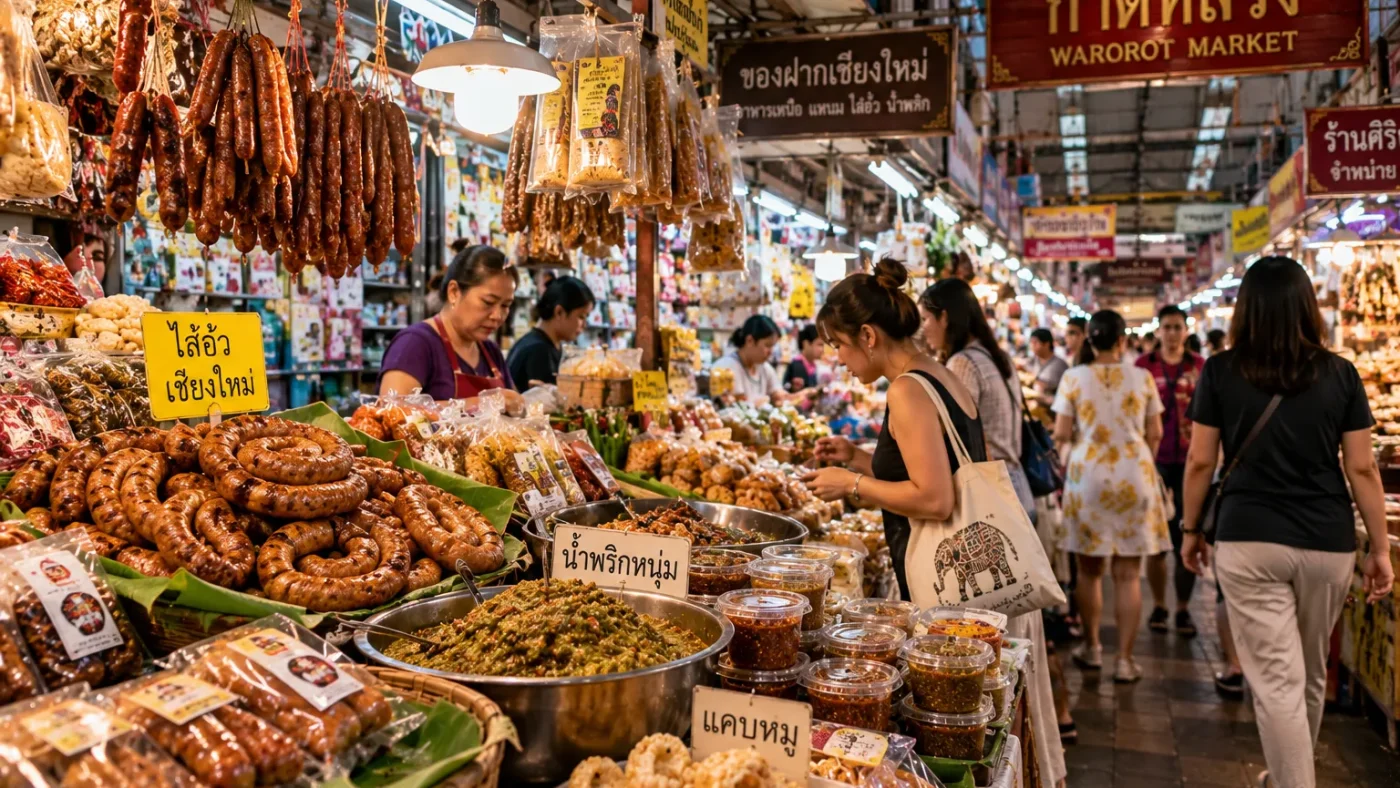
Northern sausage cases show fat ratio and herb density—good links look uneven, hand-packed, not factory smooth. Smell lemongrass and kaffir clearly; faint aroma means stale mix or too much filler rice.
Sausage and Chili HWAN789 Wants You to Smell First
Chili corners display both fresh and dried mountain varieties; color alone misleads. Ask which bag suits tom yum versus nam prik; vendors often demo by crushing a pod so you smell fruitiness versus blunt heat.
Fermented soybean pastes and shrimp sauces sit in jars that look intimidating; small tasting spoons are rare, so note brands locals grab repeatedly. Repurchase rhythm signals trust more than fancy labels.
Upstairs snack counters sell curry pastes, fried pork rinds, and ready curry packs for travelers—acceptable souvenirs if sealed well. Fresh herbs should be eaten within a day; buy them last before heading to nearby noodle shops.
Flower sections bleed into fruit stacks: longan, lychee in season, and citrus for juice stalls outside. Treat fruit as a palate reset between spicy purchases and fried snacks sampled at alley exits.
Upper floors, ground snacks
Bargaining is gentle, not theatrical; smile, bundle items, and accept fair scales. Butchers and produce sellers rarely haggle; craft vendors may if you buy multiples.
Parking and red-truck drops cluster on busy edges; enter from the river-side gate if you want produce first, cathedral-side if you want textiles before heat builds.
Nearby old-town shops extend the lesson—look for bakeries using Warorot eggs and coconut cream. Follow supply chains one block outward and meals make sense.
Leave with one ingredient to cook or gift and one snack eaten immediately. Warorot succeeds when you connect smell in the market to flavor on your plate that same afternoon.
Shop then eat nearby
Flower garland makers near Warorot entrances work while you shop; their pace mirrors market honesty. Buy a small garland if you visit a temple afterward—it connects market labor to daily spiritual routine locals maintain.
Dried chili bags vary in seed content; shake gently and listen. Rattling seeds mean serious heat waiting in your curry pot at home. Vendors respect buyers who inspect rather than grab the brightest packaging.
If carrying herbs on flights, check airline rules; fresh bundles rarely travel well anyway. Instead photograph labels and hunt similar packs in your home Asian grocery as homework extending the trip.
Warorot afternoons buzz with school uniforms buying snacks; follow teenagers cautiously—they know which fried chicken neck cart uses clean oil that day based on color and smell.
Warorot makes more sense when you carry a small cooler bag in cool season for sausages and fresh herbs you will cook within hours. Planning one home meal from market buys extends the trip into your kitchen memory. Even hotel kettles can steam sticky rice if you respect food safety and time limits.
Carry a small bag for spice purchases and eat cooked food before raw herbs leak aroma into fabric. Warorot rewards planners who treat the market as a morning workout: eyes open, feet steady, questions ready, and hunger waiting for the noodle shop you marked on the way out.